Sara Hormozinejad

Studying migration, citizenship, and belonging across borders.

I am a sociologist and migration researcher examining how people imagine mobility, navigate settlement, make citizenship decisions, and negotiate attachment, responsibility, and belonging across national and transnational contexts.

Global Migration Institute, Toronto Metropolitan University · PhD Candidate, University of Toronto · SSHRC Doctoral Scholar
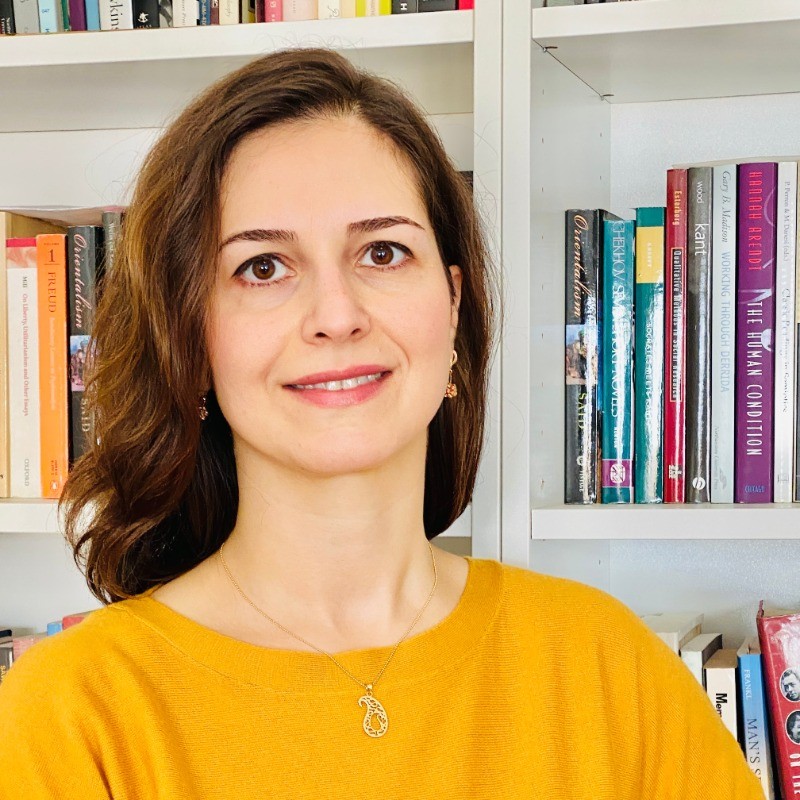
Portrait of Sara Hormozinejad
01

About

I am a social science researcher with interdisciplinary training in sociology and anthropology. I hold an MA in Anthropology from the University of Toronto and a BA (Honours) in Anthropology from the University of Calgary, and I am currently completing a PhD in Sociology at the University of Toronto with a Collaborative Specialization in Ethnic, Immigration, and Pluralism Studies.

My research focuses on global migration and mobility, with particular attention to the shifting boundaries of social inclusion and exclusion. I examine migration aspirations and imaginaries, settlement experiences and outcomes, naturalization and citizenship, return migration, and the affective politics of belonging.

My dissertation investigates how aspiring migrants living under restrictive mobility regimes construct imaginaries of the West before migration; how those imaginaries shape migration aspirations; and how they evolve through settlement experiences, sometimes generating return aspirations. My work is supported by SSHRC doctoral funding and the Ontario Graduate Scholarship.

My methodological approach is qualitative and interpretive, drawing on in-depth interviews, ethnographic observation, and narrative analysis. I am committed to research that centres the voices and experiences of migrants themselves, attending to the structural conditions that shape migration while remaining attentive to individual agency, emotion, and meaning-making.
Academic Profile

  • PhD PhD Candidate in Sociology, University of Toronto, expected 2027
  • Specialization Collaborative Specialization in Ethnic, Immigration, and Pluralism Studies
  • MA MA in Anthropology, University of Toronto
  • BA BA (Honours) in Anthropology, University of Calgary
  • Affiliation Global Migration Institute, Toronto Metropolitan University
  • Affiliation Department of Sociology, University of Toronto
  • Affiliation Munk School of Global Affairs and Public Policy
  • Affiliation Harney Program in Ethnic, Immigration, and Pluralism Studies

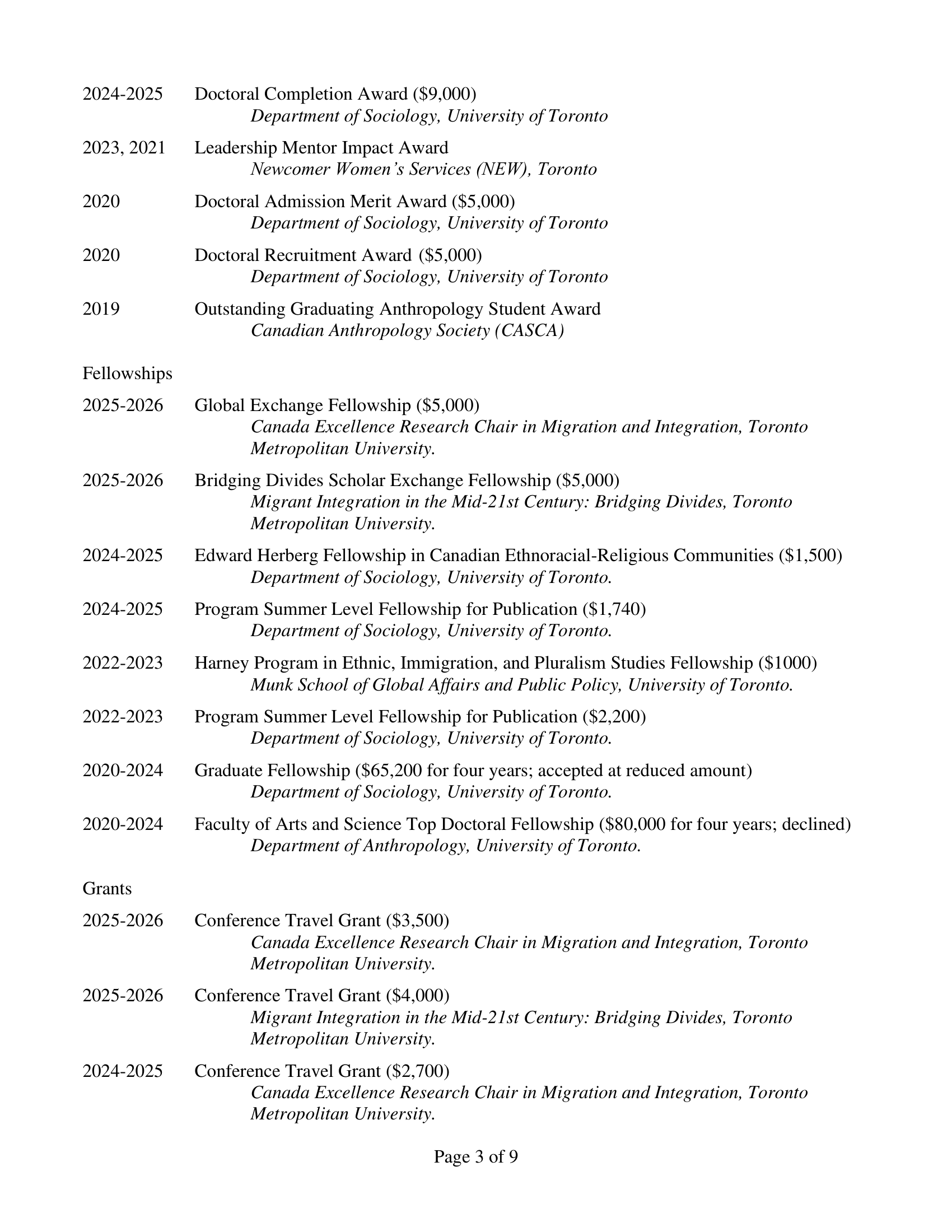
Selected Awards

  • SSHRC Doctoral Scholarship / CGS–Doctoral Award
  • OGS Ontario Graduate Scholarship
  • 2024 Edward Herberg Fellowship
  • 2024 Congress Graduate Merit Award
  • 2019 Outstanding Graduating Anthropology Student Award
  • 2019 SSHRC CGS–Master's Program
02

Research

My research investigates migration not only as movement across borders, but as a social, emotional, and political process shaped by imagination, unequal mobility regimes, legal status, family obligations, and attachments to place.

01

Migration Imaginaries and Aspirations

How do people imagine migration before departure? How are these imaginaries socially produced, and how do they transform through lived experiences of settlement? This strand explores how collective imaginaries of migration are formed, circulated, and transformed under unequal mobility regimes. My work introduces the concept of “collective fantasy” to explain how migration imaginaries can be hopeful, hegemonic, idealizing, and at times distorting.

02

Citizenship and Naturalization

Why do eligible migrants choose to naturalize or not? How is citizenship understood through legal status, geopolitical realities, life-course circumstances, family obligations, and transnational attachments? My research examines naturalization as a life-course and transnational process, attending to the emotional and relational dimensions of citizenship—how belonging is negotiated across borders and how legal status intersects with feelings of home, identity, and political membership.

03

Emotion and Return Migration

Emotion is central to the migration experience, yet it remains undertheorized in mainstream migration studies. My work introduces the concept of homo affectus to understand how emotion, care, responsibility, identity, attachment, and family ties shape return migration and migrants’ relationships to home. I examine how affective ties to family, community, and homeland influence decisions about staying, returning, or moving onward.

04

Migration, Class, and Political Economy

This strand addresses moral and political economies of migration, middle-class migration, unequal mobility, settlement, circular migration, and migration from Global South perspectives. A central commitment of my work is to advance migration scholarship that decenters Northern assumptions and attends to racialized borders, postcolonial histories, and the experiences of migrants whose perspectives have been marginalized in academic discourse.

03

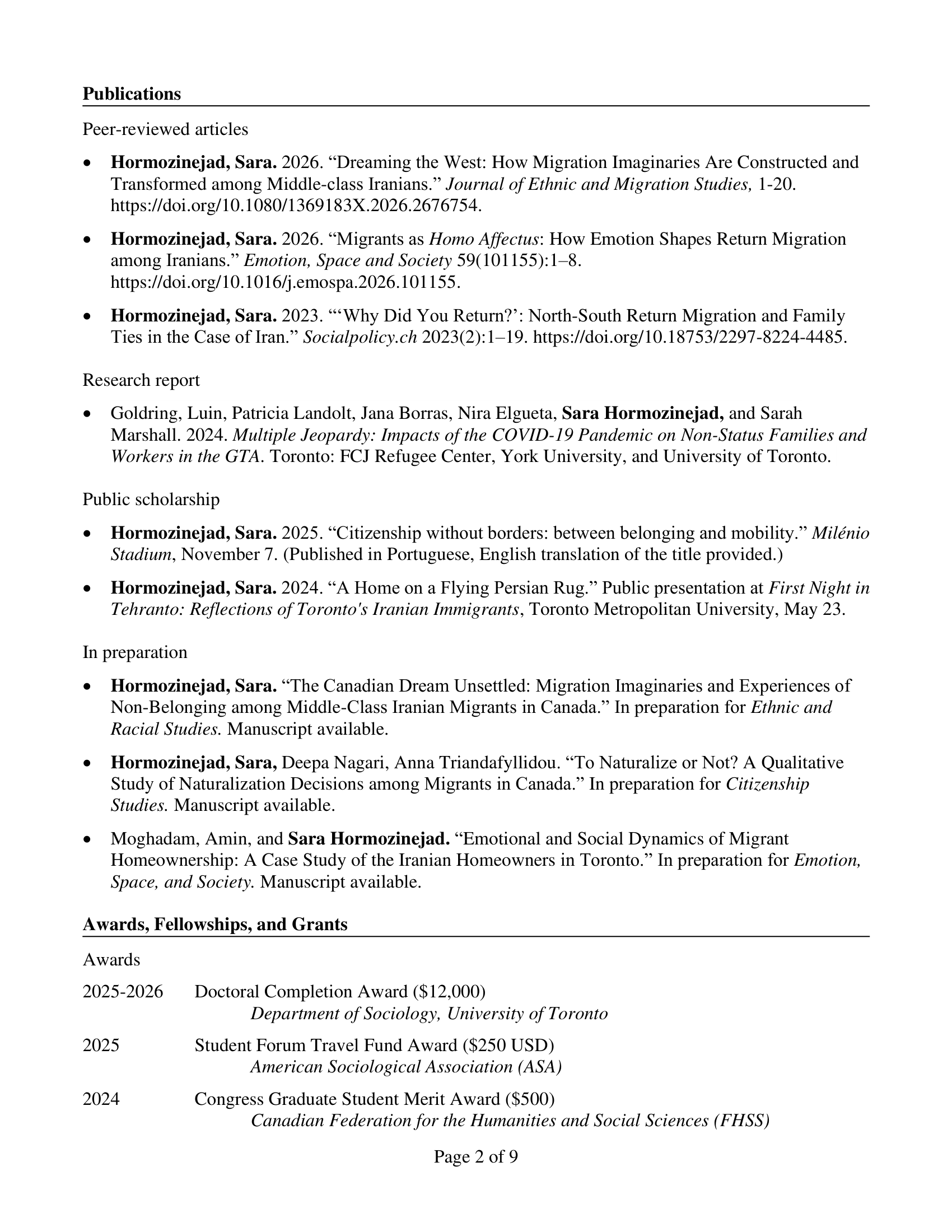
Publications

Best Student Paper Award, Canadian Sociological Association

Dreaming the West: How Migration Imaginaries Are Constructed and Transformed Among Middle-Class Iranians

Journal of Ethnic and Migration Studies, 2026

DOI: 10.1080/1369183X.2026.2676754

This article examines how migration imaginaries are constructed before migration and transformed through lived settlement experiences. It introduces the concept of “collective fantasy” to explain how migration imaginaries can be hopeful, hegemonic, idealizing, and at times distorting. Drawing on in-depth interviews with middle-class Iranians in Canada, the article traces how imaginaries of “the West” are produced through social networks, media, and cultural narratives, and how they are reworked through the realities of settlement, employment, and social integration.

Read Article

Migrants as Homo Affectus: How Emotion Shapes Return Migration Among Iranians

Emotion, Space and Society, 2026

DOI: 10.1016/j.emospa.2026.101155

This article introduces homo affectus as an analytical lens for understanding how emotion, attachment, care, identity, and responsibility shape return migration among Iranians in Canada. Moving beyond economic and structural explanations of return, the article centres the affective dimensions of migration decision-making, examining how feelings of belonging, obligation, guilt, and longing shape migrants’ relationships to places of origin and settlement.

Read Article

Why Did You Return? North-South Return Migration and Family Ties in the Case of Iran

sozialpolitik.ch, 2023

DOI: 10.18753/2297-8224-4485

This article examines return migration from Canada to Iran, exploring how family ties, care obligations, and emotional attachments shape decisions to return. It contributes to scholarship on North-South return migration by centring the role of family and affective relationships in migration decision-making.

Read Article

Multiple Jeopardy: Impacts of the COVID-19 Pandemic on Non-Status Families and Workers in the GTA

Research report, 2024

A research report examining the compounded impacts of the COVID-19 pandemic on non-status families and workers in the Greater Toronto Area, documenting the intersecting vulnerabilities faced by migrants without regularized immigration status.

Read Report
04

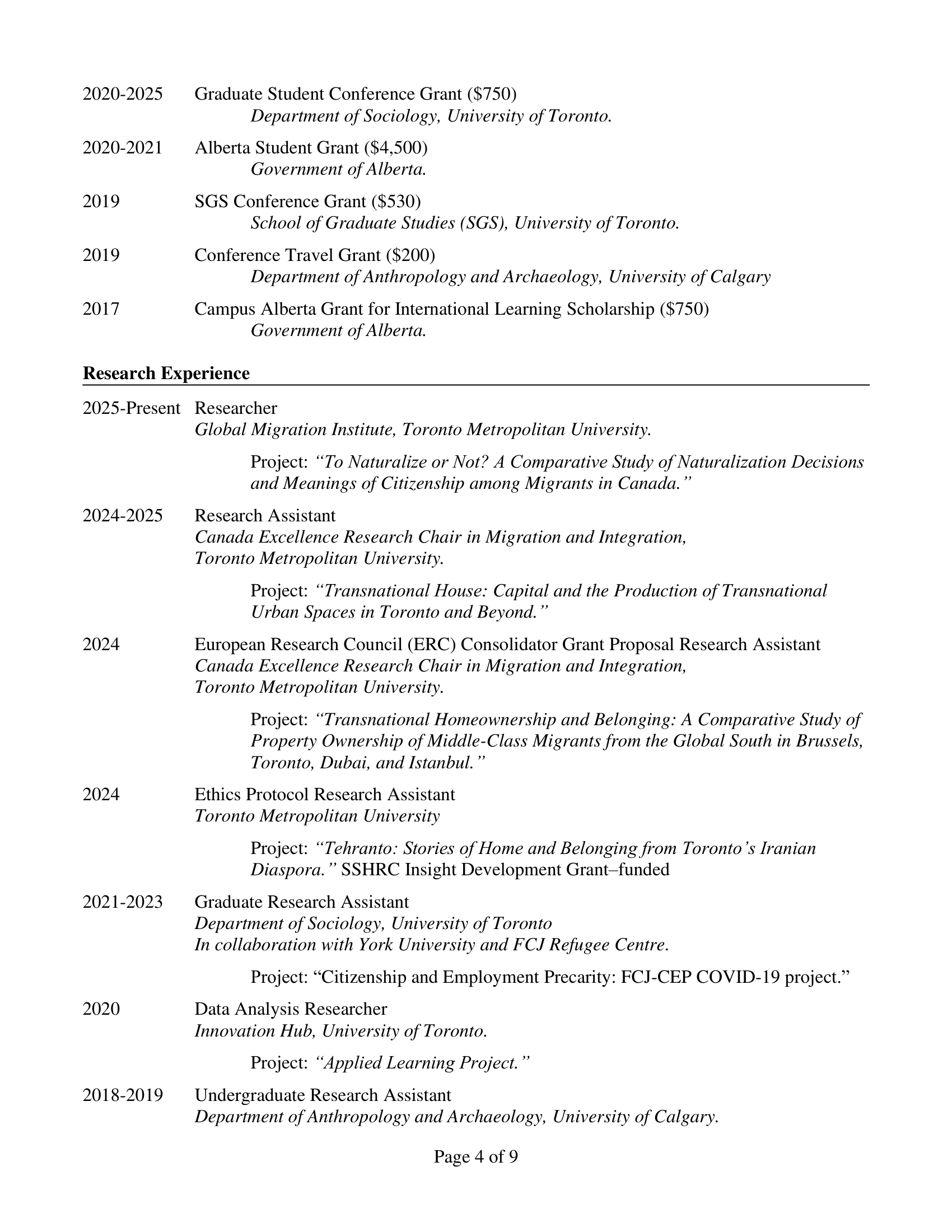
Projects & Fellowships

Current 2025–present

To Naturalize or Not?

Researcher, Global Migration Institute, Toronto Metropolitan University

A research project examining naturalization decisions and meanings of Canadian citizenship among eligible migrants. The project investigates how migrants navigate the decision to pursue Canadian citizenship, what citizenship means to them in the context of transnational lives, and how legal status, family considerations, and emotional attachments shape naturalization outcomes.

Current 2025–present

Migrant Integration in the Mid-21st Century: Bridging Divides

Researcher, Toronto Metropolitan University

A research program examining migrant integration, citizenship, public opinion, and social cohesion in contemporary Canada, bringing together interdisciplinary perspectives on migration in an era of increasing social, political, and economic divides.

Current 2024–present

Canada Excellence Research Chair in Migration and Integration

Researcher, Toronto Metropolitan University

Contributing to research on migration and integration as part of a major research initiative led by the Canada Excellence Research Chair in Migration and Integration.

Past

Transnational House Project

Research Contributor

Contributing to research examining migrants’ homeownership, homemaking, and urban experiences through a transnational lens. This work contributed to preparing a European Research Council (ERC) consolidator grant proposal.

Fellowship 2026

Bridging Divides Scholar Exchange Fellowship

Visiting Scholar, University of British Columbia Centre for Migration Studies

A research exchange focused on migrant integration, citizenship, public opinion, and migrant labour, supporting collaborative research and knowledge mobilization across Canadian migration studies networks.

Fellowship 2026

Global Exchange Fellowship

Visiting Research Fellow, University of Bristol

Visiting Research Fellow in the School of Sociology, Politics and International Studies and Migration Mobilities Bristol, supporting international scholarly exchange and collaborative research on migration, citizenship, and belonging.

Fellowship 2022–2023

Research Fellow in Ethnic, Immigration and Pluralism Studies

Harney Program, Munk School of Global Affairs and Public Policy, University of Toronto

Research fellowship supporting interdisciplinary scholarship on ethnic, immigration, and pluralism studies, with a focus on migration policy, settlement outcomes, and multiculturalism in Canadian and comparative contexts.

05

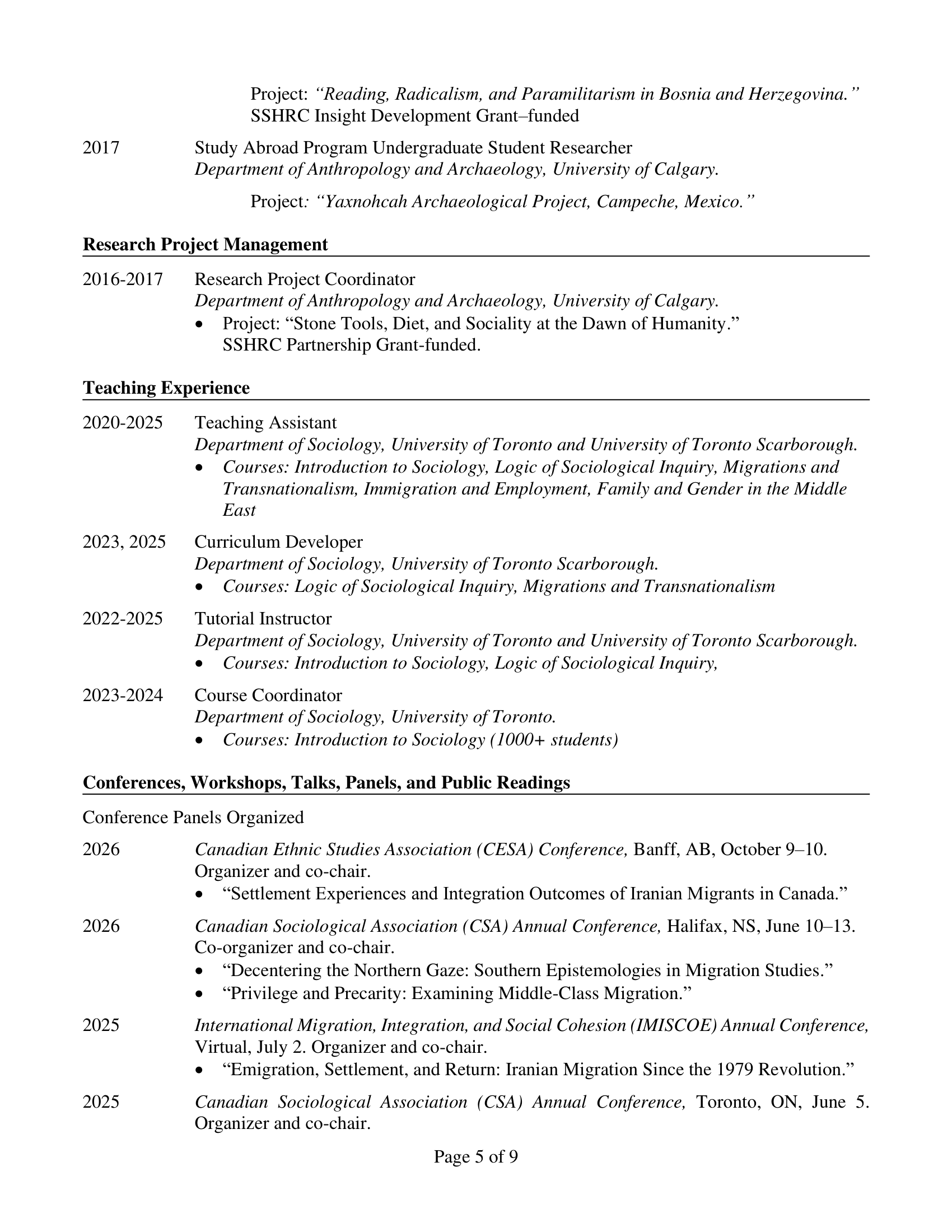
Teaching & Service

Teaching

  • 2020–present Teaching Assistant and Curriculum Developer, Department of Sociology, University of Toronto
  • 2021–2024 Research Assistant, Department of Sociology, University of Toronto
  • 2022–2023 Research Fellow, Harney Program in Ethnic, Immigration, and Pluralism Studies

Academic & Community Service

  • 2024–present Student Concerns Subcommittee Member, Canadian Sociological Association
  • 2026 Conference Program Committee Member, Canadian Sociological Association
  • 2024–present Member, IMISCOE Reflexives in Migration Studies
  • 2023–present Leadership Mentor, Newcomer Women’s Services Toronto
  • 2021–2023 ESL Instructor, FCJ Refugee Centre

Teaching Philosophy

My approach to teaching is grounded in a commitment to creating inclusive, dialogical learning environments where students feel empowered to engage critically with complex social issues. I believe that the classroom is a space for collaborative inquiry, where diverse perspectives are not only welcomed but are essential to rigorous intellectual engagement.

In my role as a Teaching Assistant and Curriculum Developer, I have facilitated tutorials and led discussions in courses on sociology of migration, social inequality, research methods, and globalization. I prioritize clarity, accessibility, and responsiveness to students’ diverse learning needs, and I strive to connect theoretical concepts to real-world issues in ways that are meaningful and relevant to students’ lives.

My mentorship work with graduate and undergraduate students focuses on supporting emerging scholars in navigating academic life, developing research skills, and building confidence in their intellectual voices. I am particularly committed to mentoring students from underrepresented and marginalized backgrounds in academia.

06

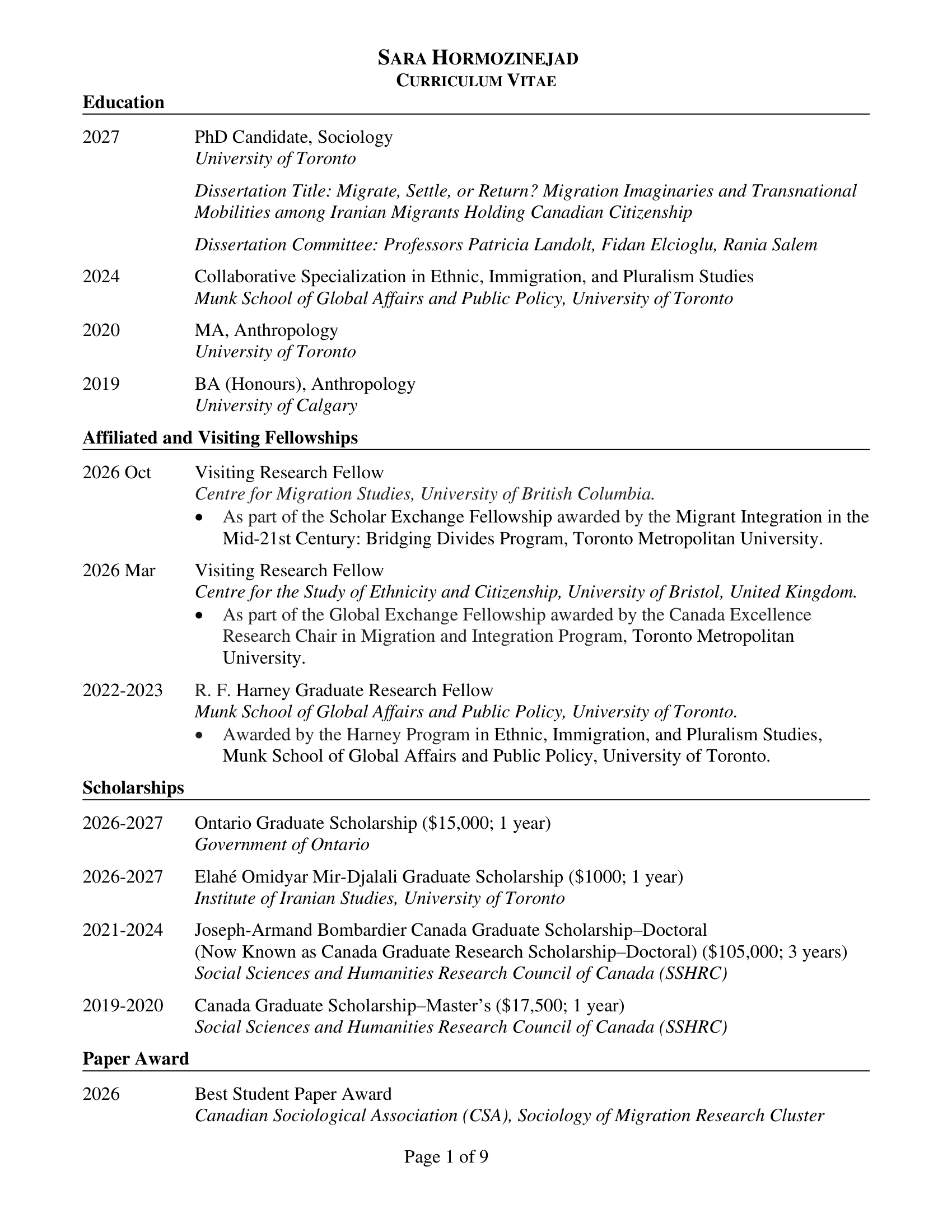
Curriculum Vitae

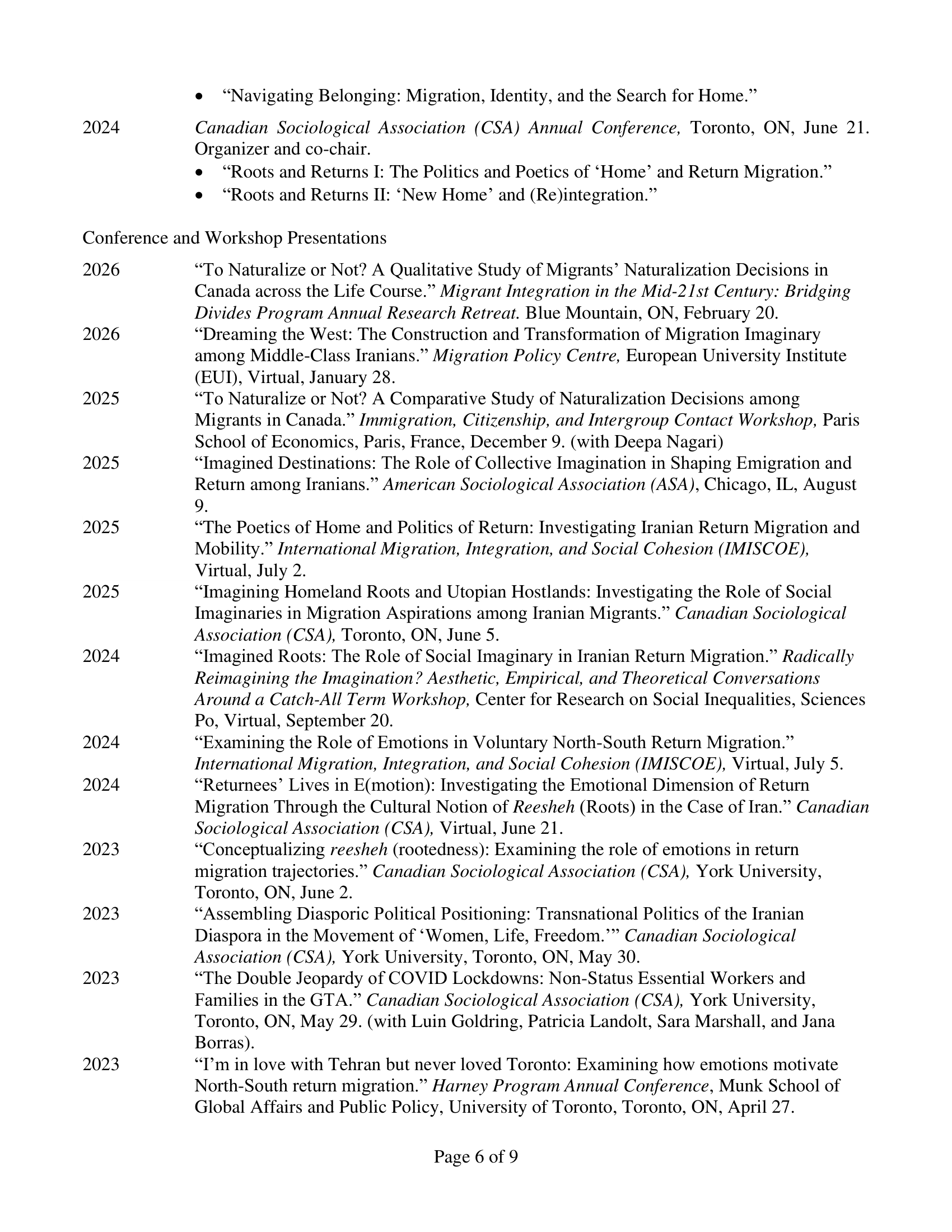
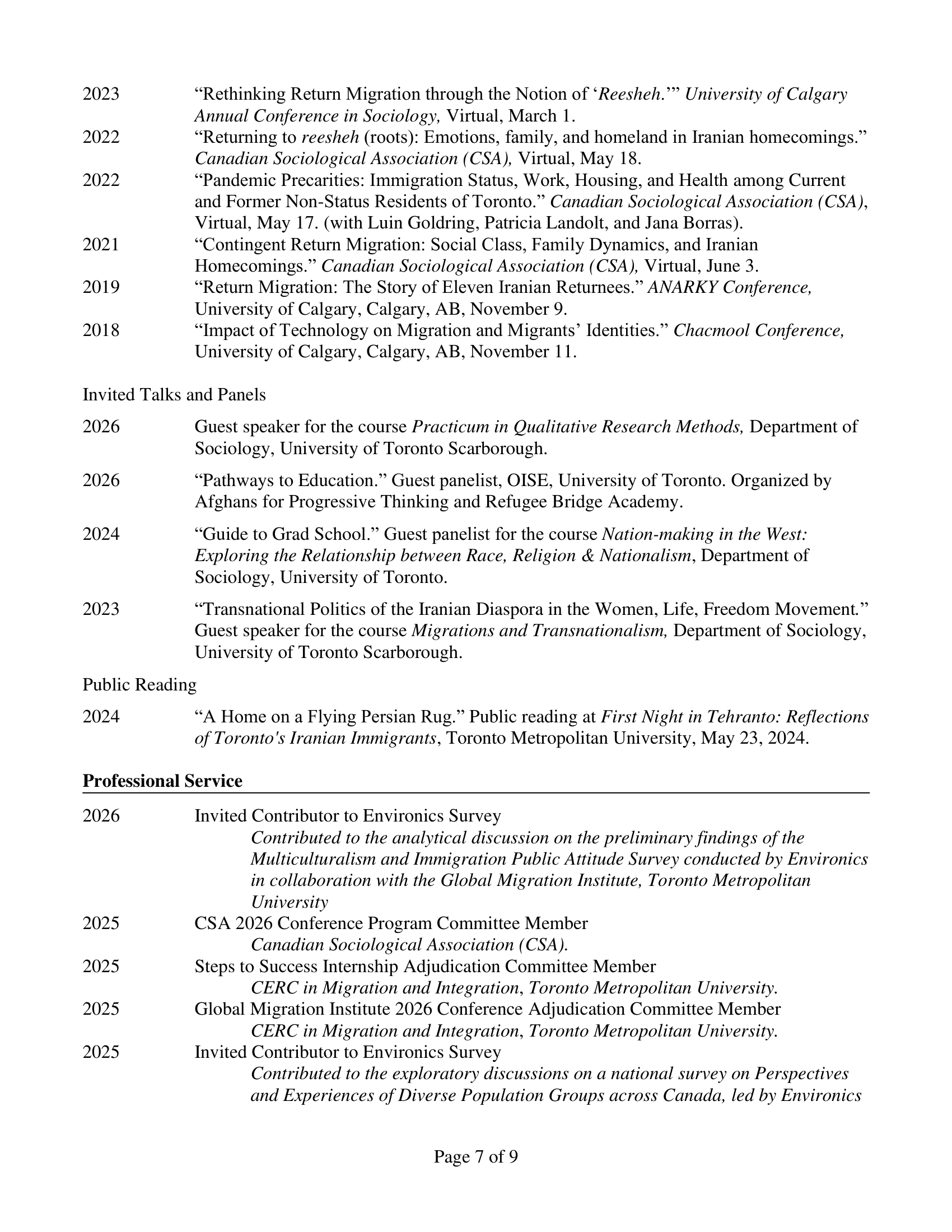
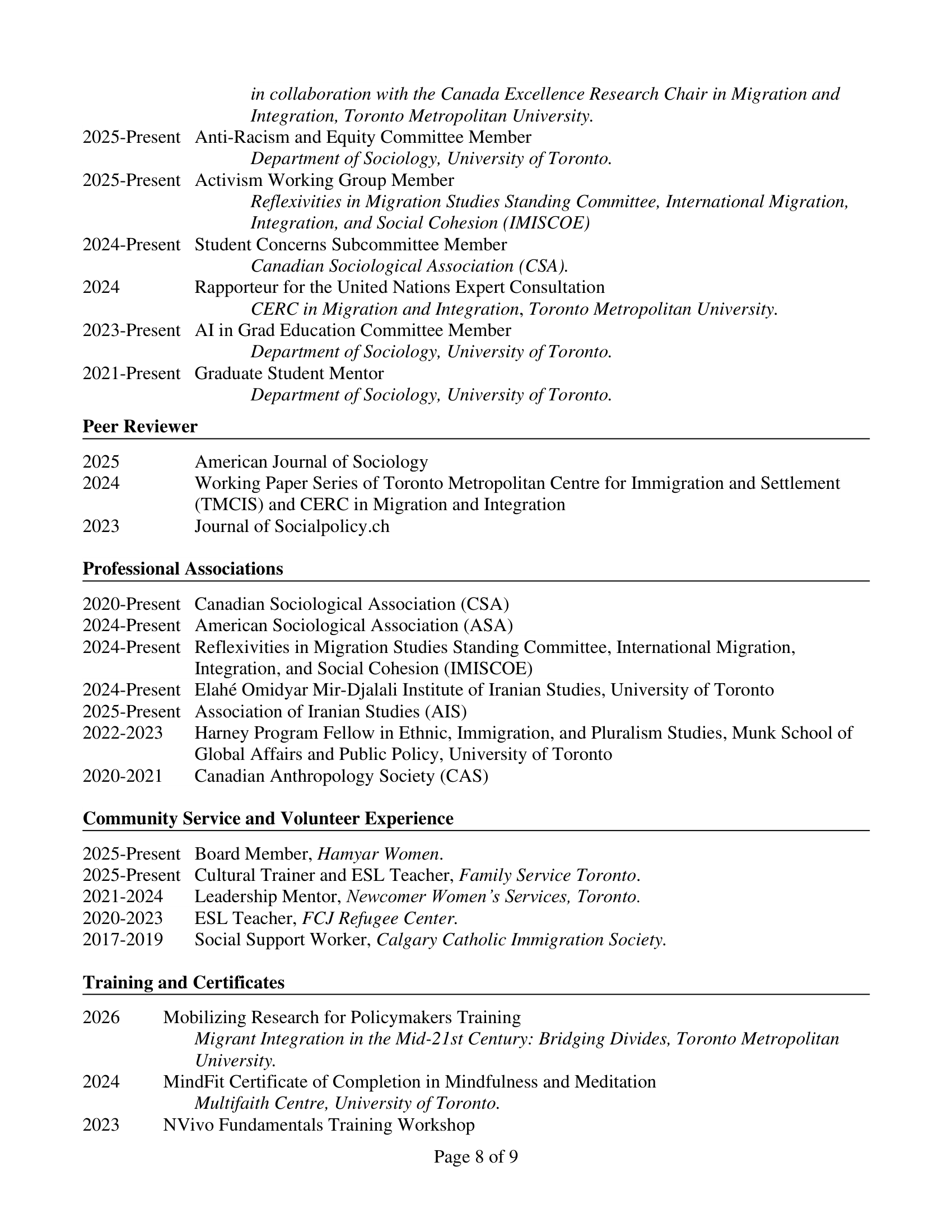
Browse the full CV below, or download a copy.

Download Full CV ↓
07

Contact

I welcome invitations for research collaborations, speaking engagements, academic workshops, and public-facing conversations about migration, citizenship, belonging, and mobility. If you are working on questions related to these areas, I would be glad to hear from you.